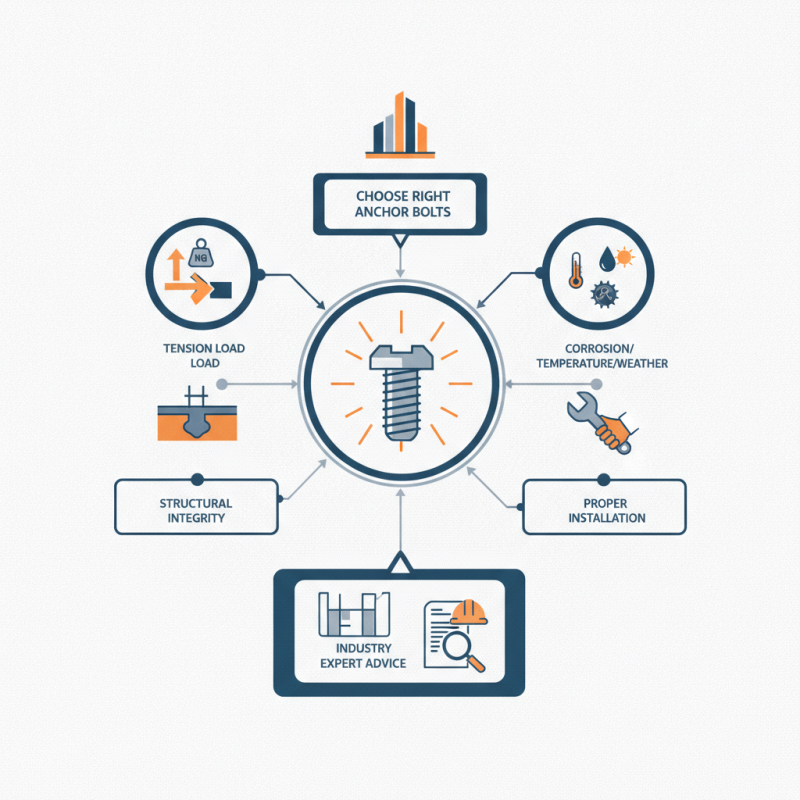
When it comes to construction, selecting the right anchor bolts is crucial. According to industry expert Dr. Mark Thompson, "The right anchor bolts ensure the integrity of your structure." This statement emphasizes the need for careful consideration.
Anchor bolts are essential for securing various structures. Their strength and durability can greatly affect the overall stability of any building project. Choosing the wrong type can lead to serious consequences. Factors like load requirements and environmental conditions play a significant role in this decision.
Many builders overlook the importance of proper installation. Improperly placed anchor bolts can compromise safety. It's also vital to ensure they meet industry standards. Reliable information and expert advice are key when making your selection. A thoughtful approach can mitigate risks and enhance project success.
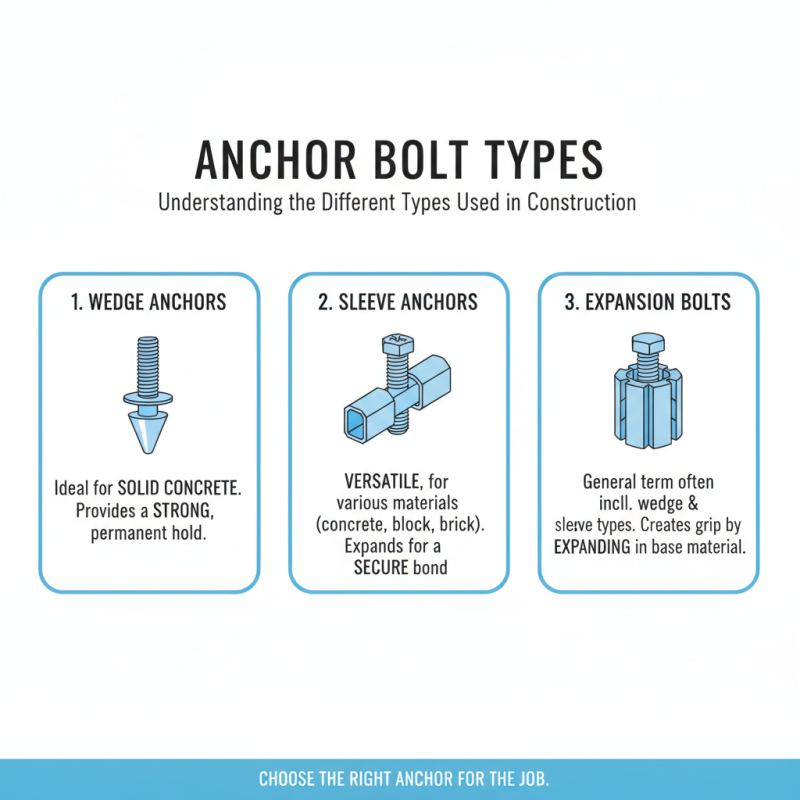
When choosing anchor bolts for a construction project, it's crucial to understand the different types available. Each type of anchor bolt serves distinct purposes. Common types include wedge anchors, sleeve anchors, and expansion bolts. Wedge anchors are ideal for solid concrete, providing a strong hold. Sleeve anchors, on the other hand, are versatile and can be used in various materials. They expand within the base material to create a secure bond.
The selection often depends on the project requirements. For example, heavy-duty applications may require structural bolts, while lighter projects can utilize lag bolts. Consider the environmental factors as well. Corrosive environments may necessitate galvanized or stainless steel options. It’s also essential to assess load capacity and installation method. Small mistakes in these areas can lead to improper anchoring and structural failures.
Engineers may reflect on their choices and learn from previous projects. Sometimes, the chosen bolts may not perform as expected. Testing and re-evaluating previous installations can enhance future decision-making. This ongoing process of assessment helps improve reliability and safety in construction endeavors.
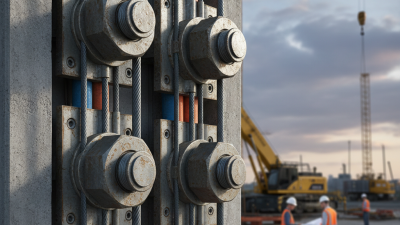
Choosing the right anchor bolts is essential for any construction project. The material of the anchor bolt is critical. Common materials include carbon steel, stainless steel, and galvanized steel. Each has its strengths and weaknesses. For instance, while stainless steel offers excellent corrosion resistance, it can be more expensive.
Another important factor is the load capacity. Understanding the load requirements for your project will guide your selection. The type of structure also matters. For heavy machinery or structures, heavy-duty bolts are necessary. In contrast, lighter applications may require only standard bolts.
Taking into consideration the installation environment is crucial. High-moisture areas need corrosion-resistant options. Also, remember that improper installation can lead to failures. Reviewing installation guides or consulting with professionals ensures better outcomes. There are often lessons learned from past projects that highlight the importance of these factors. Ignoring them can result in costly mistakes. Your selected anchor bolts should align with the project's unique demands.
When selecting anchor bolts for your construction project, material strength and corrosion resistance are two critical factors to consider. The strength of the material directly impacts the load-bearing capacity of the bolts. High-strength steel is commonly used in construction due to its performance and reliability. However, not all situations call for the same strength. Understanding the specific requirements of your project is essential. Sometimes, over-engineering can lead to unnecessary costs.
Corrosion resistance is just as vital. Environmental conditions can significantly affect the longevity of anchor bolts. For projects in marine or industrial settings, stainless steel or galvanized options provide better protection against corrosion. These materials resist rust and degradation, ensuring long-term performance. Pay attention to local weather conditions and select materials accordingly; it’s a practical choice that can save future maintenance costs.
Tips: Always check the manufacturer's specifications regarding strength ratings. If in doubt, consult a construction expert. Test the materials under real conditions to see how they react over time. Remember, the right choice today can prevent costly repairs tomorrow. Prioritize both strength and resistance to ensure your project's success.
Understanding load requirements is crucial when selecting anchor bolts for construction projects. Load types can include tension, shear, and moment considerations. Tension loads pull the bolt outward, while shear loads push it sideways. Each load type affects the choice of bolt material and size.
Calculating ultimate strength helps ensure safety. This involves understanding the combined effects of tension and shear forces. Engineers often use specific formulas to determine these values. They assess the worst-case scenarios that could occur during the life of the structure. This process isn't always straightforward. Mistakes in load calculations can lead to serious failures.
Designers must also consider the environment in which the bolts will be used. Corrosion resistance may be necessary for damp locations. Heavy loads require larger bolts, which can complicate installations. Different materials present unique challenges and benefits. It's essential to choose wisely and reflect on past projects.
When it comes to anchor bolt installation, adhering to industry standards is crucial. The American Concrete Institute (ACI) reports that improper installation can lead to structural failures. In a study, 30% of construction defects were linked to faulty anchor bolt placement. These failures not only compromise safety but also escalate costs due to repairs and delays.
Understanding regulations is vital. The International Building Code (IBC) emphasizes the need for specific materials and installation protocols. For example, bolts must be galvanized or stainless-steel treated in corrosive environments. This is non-negotiable. Studies show that using inappropriate materials can reduce the lifespan of structures significantly.
Furthermore, regular inspections and adherence to standards like ASTM F1554 are essential. Non-compliance can lead to legal repercussions. It raises questions about accountability in construction practices. The industry must strive for continuous improvement. Discussions around safety are often sidelined, yet they should be front and center in every project. Addressing these gaps can lead to a higher standard of reliability in construction.