Inquiry
Form loading...
Choosing the right U Bolts begins with the load, not the catalog photograph. A U bolt must resist tension, shear, vibration, corrosion, and repeated movement. Its diameter, thread length, bend radius, material, and saddle fit all influence performance. A slightly incorrect radius can create gaps around a pipe. That gap may concentrate pressure and weaken the connection.
Industry data shows why careful selection matters. MarketsandMarkets estimates that the global fasteners market will grow from about USD 90 billion in 2023 to more than USD 116 billion by 2028. Construction, automotive, energy, and infrastructure projects continue driving demand. However, market growth does not make every fastener suitable. ASTM A307, ASTM A449, and ASME B18.31.5 provide useful reference points, but project conditions still require engineering judgment. Standards are guides. They are not substitutes for inspection.
John H. Bickford, author of Handbook of Bolts and Bolted Joints, emphasizes a central bolting principle: “The bolt is only one part of the bolted joint.” That idea is easy to overlook. The pipe, bracket, washers, nuts, coating, and tightening method work together. This guide explains how to match U Bolts with real project demands, including load calculations, thread engagement, material selection, and environmental exposure. Some choices remain imperfect. Field measurements may disagree with drawings. Corrosion may appear sooner than expected. Good selection leaves room for those realities.
How to Choose the Right U Bolts for Your Project?
Define the Load, Environment, and Mounting Requirements
Start by defining the load, not the bolt size. Identify the weight, vibration, shock, and direction of force. A pipe support may carry a steady load, while a trailer frame can experience sudden movement. Calculate the working load, then include a suitable safety margin. Do not rely on appearance alone. A thick U bolt can still fail if its legs spread under tension.
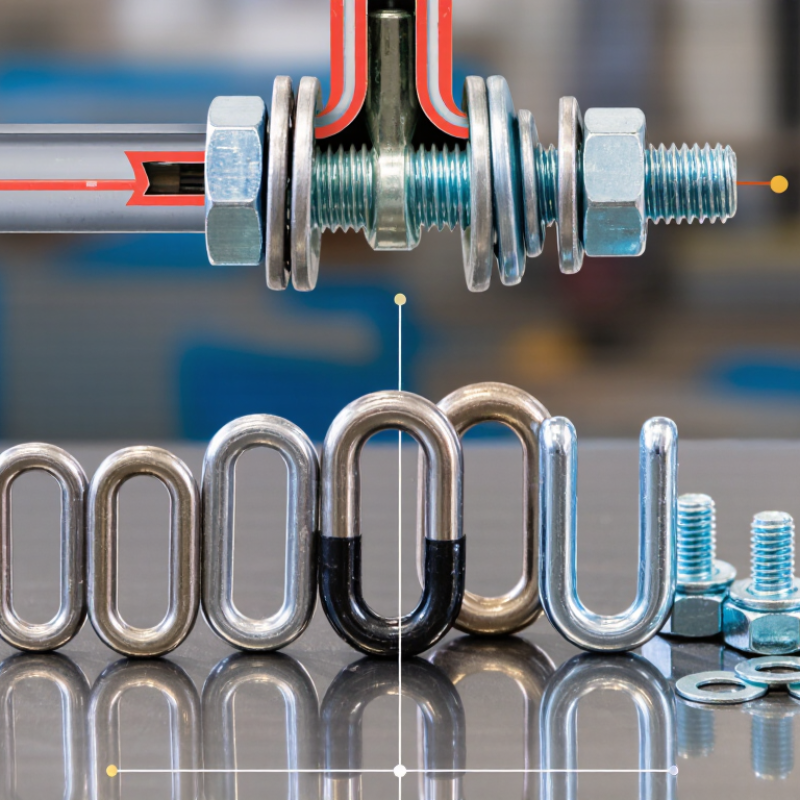
Measure the mounted object carefully. Record its outside diameter, width, and available clearance. The U bolt should fit closely without crushing the pipe or leaving excessive movement. Match the thread length to the washer, nut, plate, and required engagement. Uneven threads are a warning sign. Check the bend radius too, because a tight bend may weaken the steel.
The environment changes the material choice. Outdoor moisture, road salt, chemicals, and high temperatures can accelerate corrosion. Select a finish or alloy suited to those conditions. Keep dissimilar metals separated when galvanic corrosion is possible. Installation matters as much as selection. Tighten both nuts evenly, and follow the specified torque when available. Over-tightening may deform the assembly. Under-tightening allows vibration and fretting. A final inspection should check alignment, thread engagement, and contact marks. It is easy to overlook small gaps. That oversight can become the real failure point.
| Selection Dimension | Requirement to Define | Practical Engineering Guidance | Recommended U-Bolt Selection | Information to Confirm |
|---|---|---|---|---|
| Load | Working load and safety margin | Calculate the combined vertical, lateral, and longitudinal loads. Include the weight of the supported assembly, operating loads, vibration, impact, and a suitable design factor. | Choose a U bolt whose allowable capacity exceeds the calculated design load. Do not select solely by nominal diameter. | Load direction, peak load, design factor, and load-sharing method |
| Load | Tension, shear, or combined loading | U bolts can experience direct tension, transverse shear, bending, or a combination of these forces. Combined loading normally requires a design check rather than a simple size comparison. | Use a larger diameter, higher-strength material, reinforced mounting plate, or a different fastening arrangement when combined loads are significant. | Force components, eccentricity, contact points, and plate thickness |
| Load | Dynamic load and vibration | Repeated vibration can loosen nuts, increase fatigue stress, and cause fretting between the U bolt and the clamped part. | Specify a suitable locking method, controlled tightening, adequate clamping length, and a radius that avoids sharp stress concentration. | Vibration level, duty cycle, fatigue exposure, and inspection interval |
| Environment | Corrosion exposure | Moisture, road salt, chemicals, coastal air, and outdoor exposure can reduce cross-sectional area and thread performance. | Use a corrosion-resistant alloy or an appropriate protective coating. Ensure that the coating is compatible with the service environment and mating hardware. | Humidity, salt spray, chemicals, temperature, and expected service life |
| Environment | Operating temperature | Temperature affects material strength, coating performance, lubrication, and thermal expansion. Elevated temperature can reduce the strength of some fastener materials. | Select material, finish, lubricant, and nut type for the actual minimum and maximum operating temperatures. | Continuous temperature, peak temperature, thermal cycling, and fire exposure |
| Environment | Galvanic compatibility | Dissimilar metals in the presence of an electrolyte can accelerate galvanic corrosion, especially in wet or marine conditions. | Match compatible materials or use suitable insulating barriers, washers, coatings, and drainage provisions. | Base material, U-bolt material, coating system, and moisture retention points |
| Mounting | Pipe, tube, or rod outside diameter | Measure the actual outside diameter, including any surface coating or insulation that must fit inside the U bolt. | Specify an inside width that provides installation clearance without allowing excessive movement. Avoid forcing the legs together during assembly. | Outside diameter, insulation thickness, clearance, and tolerance |
| Mounting | U-bolt inside width and leg length | Inside width must suit the supported member, while leg length must provide enough thread engagement for the washer and nut assembly. | Allow room for washers, locking hardware, and adjustment. Avoid bottoming the nut before the clamp is fully seated. | Inside width, inside height, thread length, washer thickness, and nut height |
| Mounting | Thread size and pitch | Thread diameter and pitch affect tensile area, nut compatibility, installation torque, and resistance to stripping. | Use a standardized thread that matches the selected nuts and washers. Keep the complete assembly within the required clearance envelope. | Nominal diameter, thread pitch, thread class, and available tools |
| Mounting | Bend radius and contact profile | A smooth bend distributes stress more evenly than a sharp bend. The contact area should suit the shape of the pipe or structural member. | Choose a formed radius that matches the supported part and avoid unauthorized field heating or rebending, which can change material properties. | Supported-part radius, bend geometry, contact pressure, and edge clearance |
| Installation | Tightening method | Uneven tightening can distort the supported part, create side loading, or produce insufficient clamp force. Torque values depend on material, finish, lubrication, and thread condition. | Follow the project specification or engineered torque requirement. Tighten both nuts evenly and verify the assembly after initial service. | Torque basis, lubrication, tightening sequence, and calibration of tools |
| Installation | Locking and service access | Vibration and thermal cycling may reduce preload. Restricted access can make inspection and retightening difficult. | Provide access for inspection and use a locking method suitable for the temperature, vibration, and maintenance requirements. | Locking hardware, access space, inspection frequency, and replacement plan |
| Compliance | Material and fastener specification | Mechanical properties, traceability, dimensions, and testing requirements should be defined before procurement. | Specify material grade, diameter, thread, dimensions, coating, nuts, washers, and applicable engineering or industry standard. | Drawings, certificates, inspection requirements, and acceptance criteria |