What Are the Top Types of Hex Nuts?
Choosing the right Hex Nuts begins with understanding how each design handles load, vibration, space, and installation conditions. A standard hex nut suits many general-purpose joints, while a heavy hex nut offers greater wrenching surface and stronger thread engagement. Nylon insert lock nuts resist loosening in moderate vibration. All-metal lock nuts perform better near heat, oil, or harsh industrial environments.
Flange nuts spread pressure across a wider bearing surface. Jam nuts help secure components where space is limited. Castle nuts work with drilled bolts and cotter pins, creating a visible mechanical locking method. Each type has a practical role. The best choice depends on the bolt grade, thread size, tightening method, and service environment.
Fastener engineer Dr. James D. McCauley has emphasized, “A nut is only as reliable as the joint it serves.” That observation remains useful, although it does not answer every application. Real assemblies can behave differently from laboratory expectations. A clean thread may still fail when washers, coatings, or installation torque are overlooked. Small details matter.
This guide examines the top types of Hex Nuts through a practical engineering lens. It refers to recognized standards, including ASME, ASTM, and ISO requirements, where relevant. It also considers material options, corrosion resistance, locking performance, and common installation errors. Readers should verify manufacturer data before selecting parts for safety-critical equipment. A perfect universal nut does not exist. Context decides.
Hex Nuts: Definition, Structure, and Basic Functions
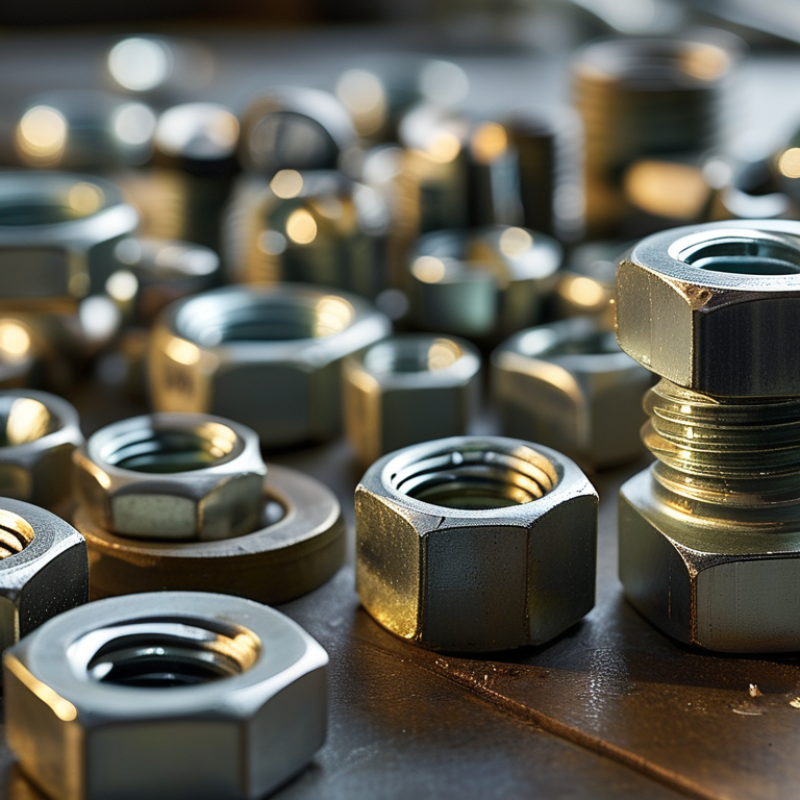
A hex nut is a threaded fastener designed to join with a bolt or threaded stud. Its six-sided outer shape gives a wrench six contact points for tightening or removal. Inside, accurately formed threads match the bolt’s pitch and diameter. The flat underside, called the bearing face, presses against the connected material or a washer. Small details matter.
Common types include standard hex nuts, jam nuts, flange nuts, and prevailing-torque lock nuts. A standard nut suits general assembly work. A jam nut is thinner and helps secure another nut in limited spaces.
A flange nut has a built-in circular base, spreading pressure across a wider area. Lock nuts resist loosening from vibration, although their holding ability can decline after repeated use.
In practical assembly, the nut should turn smoothly by hand before a wrench is used. Cross-threading often feels rough immediately, but forcing it can damage both parts. A washer may protect painted surfaces and improve load distribution. The nut must also match the bolt’s thread system and material strength. Tightening too little allows movement; tightening too much can stretch the bolt or crush softer material. Torque guidance is useful, yet real joints are rarely perfect. Dirt, worn threads, and uneven surfaces can change the result. A visual check alone is not enough.
Standard Hex Nuts for General-Purpose Fastening
Standard hex nuts remain the practical choice for general-purpose fastening. Their six-sided shape gives a wrench firm contact, even in crowded assemblies. They pair with standard bolts and machine screws for furniture, brackets, equipment frames, and maintenance work. Grand View Research estimated the global fasteners market at approximately USD 94.6 billion in 2023, showing the scale of everyday fastening demand. Yet market size does not make every nut suitable for every joint.
A reliable selection begins with thread compatibility, material, and strength grade. ASME B18.2.2 defines key dimensional requirements for inch-series hex nuts, while ISO 898-2 covers mechanical properties for metric nuts. Carbon steel works well for many indoor applications. Zinc-plated finishes can improve basic corrosion resistance, but they are not a cure for constant moisture or chemicals. I have seen loose joints caused by mixed thread pitches, not defective nuts. That mistake is easy to miss. For vibration, heat, or high structural loads, a standard hex nut may need a locking method or a professionally specified alternative.
Tips: Match the nut to the bolt’s diameter, thread pitch, and strength class. Check the washer surface before tightening. It should be clean and flat. Use a calibrated torque wrench when the assembly carries meaningful loads. Recheck the joint after installation, especially where vibration is present. A torque value from memory may be wrong; consult the relevant specification or engineering drawing.
Heavy-Duty Hex Nuts for High-Load Applications
Heavy-duty hex nuts are built for joints facing serious clamping forces, vibration, and repeated loading. Their larger dimensions can improve load distribution across connected materials. In field maintenance, I look beyond size. Thread fit, grade, surface condition, and washer contact all matter. A strong nut cannot rescue damaged threads. That detail is easy to miss.
For steel structures, machinery frames, and lifting-support assemblies, high-strength hex nuts are often selected with matching bolts. The nut should meet or exceed the bolt’s strength class when the joint design requires it. Coarse threads usually tolerate dirt and minor damage better than fine threads. Fine threads can offer precise adjustment and greater tensile engagement, but they demand cleaner handling. Check the specification. Do not guess.
A hardened nut may resist deformation under heavy preload, while a corrosion-resistant finish helps in damp workshops or outdoor equipment. Yet coating thickness can affect thread engagement. I have seen suitable-looking parts bind during installation because the finish was overlooked. Use calibrated torque tools, inspect mating surfaces, and follow the approved engineering procedure. Lubrication also changes torque results, so its use must be specified.
Before service, verify thread diameter, pitch, material, grade markings, and seating condition. Replace nuts showing cracks, rounded corners, or damaged threads. Reusing them may seem economical, but hidden deformation can reduce clamping reliability. Heavy-duty does not mean maintenance-free. Load direction, vibration, temperature, and joint movement still deserve review.
Locking Hex Nuts for Vibration Resistance
What Are the Top Types of Hex Nuts?
Locking hex nuts are designed to resist loosening when machines vibrate, shake, or reverse direction. Common options include nylon-insert nuts, all-metal prevailing-torque nuts, and serrated flange nuts. Each creates resistance differently. Nylon inserts grip the bolt thread, while all-metal designs deform slightly around it. Serrated flanges bite into the joint surface.
The DIN 25201-4 Junker test evaluates fastener loosening under transverse vibration. It measures clamp-force loss during repeated movement. NASA-RP-1228 also reports that torque-based preload can vary by about 25%, mainly because of friction. That figure matters. A nut may feel tight while the joint remains under-clamped. In practice, clean threads, correct torque, and adequate thread engagement matter as much as the nut style.
Nylon-insert nuts suit moderate temperatures and ordinary equipment. All-metal locking nuts are better for hotter assemblies or repeated servicing. Serrated types can damage painted or finished surfaces, so that trade-off needs attention. I have seen vibration blamed on the nut when uneven surfaces caused the real failure. The inspection was incomplete. Check the mating faces, bolt length, and prevailing torque before installation. Reusing a locking nut may also reduce resistance, although the actual loss depends on its design and service history. A controlled retightening check can reveal problems before visible movement appears.
Flange, Slotted, and Cap Hex Nuts for Specialized Uses
What Are the Top Types of Hex Nuts?
Flange, slotted, and cap hex nuts solve different fastening problems. A flange hex nut adds a washer-like bearing surface. It spreads pressure across thin sheet metal and reduces surface indentation. Serrated versions improve resistance to vibration, but they can mark painted or machined surfaces. Grand View Research estimated the global industrial fasteners market at USD 90.62 billion in 2023. That scale reflects the importance of choosing the correct nut, not simply the cheapest one.
Slotted hex nuts work with drilled bolts and cotter pins. They suit steering, suspension, and other assemblies requiring visible mechanical locking. They need correct slot alignment, so tightening slightly beyond the target torque may be unacceptable. Cap hex nuts cover exposed threads and protect against moisture, impact, and sharp edges. They also provide a cleaner appearance. However, a cap nut can bottom out before clamping begins. This detail is easy to miss. ASME B18.2.2 defines dimensional requirements for hex nuts, while ISO 898-2 addresses nut mechanical properties. Material grade, thread fit, and temperature still require separate checks.
Tips: Match the nut to the load, not the appearance. Check flange diameter against the contact surface. Verify cotter-pin holes after torqueing. For cap nuts, measure stud projection first. A torque wrench helps, but it cannot correct damaged threads. My practical preference is simple: test one assembled sample before ordering thousands. Real parts sometimes disagree with drawings.