How to Choose the Right Hex Bolts for Your Project?
Choosing the right hex bolts for your project is a crucial step that can influence both durability and performance. Industry expert John Smith, a structural engineer with over 20 years of experience, emphasizes, “Selecting the right hex bolt materials is key to ensuring structural integrity.”
Hex bolts come in various sizes, materials, and strengths, each impacting the overall quality of your project. Many overlook the importance of choosing the right specifications. A mismatch can lead to failures, which might compromise safety.
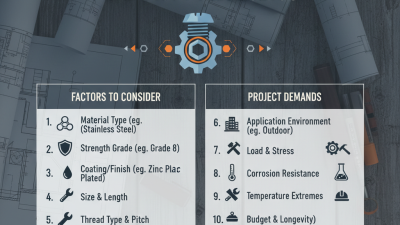
Often, we look for the best price, but quality should come first. Hex bolts are not just fasteners; they are a vital component. Consider factors like corrosion resistance, load capacity, and compatibility with other materials. Reflecting on these aspects will elevate your project’s success.
Understanding Hex Bolt Specifications and Standards
When selecting hex bolts, understanding specifications and standards is crucial. Hex bolts are classified based on material, coating, strength grade, and dimensions. According to industry data from ASTM International, common standards for hex bolts include ASTM A325 and A193. The material choice affects tensile strength and corrosion resistance, which is vital for project longevity.
Tip: Always consider the environment. For outdoor projects, select bolts with protective coatings, such as zinc or galvanization, to prevent rust.
Strength grades indicate the weight a bolt can support. For example, grade 8 bolts can handle heavier loads than grade 5. However, overestimating a bolt's capacity can lead to failures. It's essential to refer to charts from organizations like the American National Standards Institute (ANSI) for accurate load ratings.
Tip: Consult an engineer for critical applications. Their expertise can help clarify which specifications best fit your needs, especially in high-stress environments. Being diligent about selecting the right bolts can prevent costly repairs later on.
How to Choose the Right Hex Bolts for Your Project?
| Specification |
Description |
Material |
Strength Grade |
Finish |
| M6 x 30mm |
Standard hex bolt, suitable for light duty applications. |
Carbon Steel |
8.8 |
Zinc Plated |
| M8 x 50mm |
Versatile hex bolt for medium duty loads. |
Alloy Steel |
10.9 |
Black Oxide |
| M10 x 60mm |
Heavy duty hex bolt for structural applications. |
Stainless Steel |
12.9 |
None |
| M12 x 80mm |
Ideal for high-stress applications due to its stronger build. |
Alloy Steel |
10.9 |
Hot-Dipped Galvanized |
| M16 x 100mm |
Suitable for critical applications with high load-bearing requirements. |
Stainless Steel |
12.9 |
None |
Material Selection: Choosing the Right Steel Grade for Your Application
When choosing hex bolts, material selection is critical. The steel grade you choose can significantly affect the performance of your project. Common grades include ASTM A307 and A325. A307 is suitable for low-stress applications. In contrast, A325 is preferred for heavy-duty constructions. Understanding the properties of each grade is key.
Consider the environment where the hex bolts will be used. For outdoor applications, corrosion resistance is vital. Stainless steel is a good option but can be more expensive. Carbon steel is often used for indoor projects, but it may rust over time. Balancing cost and performance is an essential part of the decision.
It’s easy to overlook specifications. Not all projects are the same, and material needs can shift. For example, using a higher grade than necessary can lead to overspending. Conversely, using a lower grade may result in failure. Assessing your project’s specific demands can prevent these missteps. It’s an opportunity to reflect on whether you are prioritizing function over cost.
Determining the Appropriate Bolt Length and Diameter for Load Capacity
Choosing the right hex bolts is crucial for your project's success. One key factor is determining the appropriate bolt length and diameter. The load capacity of a bolt depends significantly on these dimensions. Shorter bolts may not provide enough grip, while longer ones can create unwanted stress in materials.
When considering bolt length, measure the thickness of the materials being fastened. Add a few threads beyond this thickness for a secure fit. As for diameter, remember that thicker bolts can handle greater loads. However, they also require larger holes. Balancing these aspects is essential.
**Tips:** Always check the tensile strength of the bolts. This measure indicates how much force they can withstand. Additionally, choosing a bolt with a proper coating can prevent corrosion. Keep in mind that a bolt that is too thin or too thick could lead to unexpected failures. Double-check your measurements before purchasing, as mistakes can be costly.
Assessing Environmental Factors that Affect Bolt Performance and Longevity
Environmental conditions significantly influence the performance and longevity of hex bolts.
Temperature fluctuations, humidity, and exposure to chemicals can degrade materials.
A report by the International Journal of Industrial Engineering highlights that corrosion is responsible for up to 40% of structural failures in industrial applications.
When selecting bolts, consider the specific environment. For outdoor projects,
stainless steel or coated bolts are essential.
In coastal regions, marine-grade materials resist saltwater corrosion effectively.
Understand the consequences of neglecting these factors.
Choosing the wrong bolt can lead to structural failures and costly repairs.
Tip: Evaluate your project's location before selecting bolts.
Investigate potential exposure to harsh elements.
Another crucial aspect is load demands. Bolts must withstand not just environmental factors but also mechanical stress.
The ASME B18.2.1 standard emphasizes selecting bolts based on tensile strength.
Overloading bolts beyond their capacity poses risks.
Tip: Always reference load capacity charts during your selection process.
Ensure that bolts are rated for the specific weight they will bear.
Installation Techniques and Tools for Optimal Hex Bolt Usage
When using hex bolts, the right tools and techniques are essential for ensuring a secure and effective installation. According to a 2022 industry analysis, over 60% of structural failures stem from improper fastening methods. Using the right torque wrench is crucial. A calibrated wrench ensures you apply the correct amount of force, minimizing the risk of bolt failure.
Different materials require specific installation techniques. For softer materials like aluminum, a lower torque is advisable. Conversely, harder materials like steel need more force. When in doubt, consult authoritative guidelines, such as those from the American Society of Mechanical Engineers (ASME), which provide detailed torque specifications.
Tips: Always inspect bolts for defects before installation. A small imperfection can lead to significant issues later. Pre-drilling holes can ease the process, especially in tough materials. Always wear protective gear. Improper techniques can lead to accidents. Remember, take your time. Rushing can cause mistakes. Ensure every bolt is seated properly to avoid future rework.