Inquiry
Form loading...

How to Choose China Top Sleeve Anchors Suppliers?

Choosing China’s top Sleeve Anchors suppliers requires more than comparing catalog prices. The right decision depends on verified performance, production control, and dependable export experience. A low quotation can hide inconsistent expansion cones, weak plating, or incomplete test records. In a real project, a sleeve anchor must grip concrete securely, even when dust, edge distance, and installation torque vary.

Industry standards provide a practical screening framework. ICC-ES AC106 outlines evaluation requirements for mechanical anchors used in concrete and masonry. ASTM E488/E488M describes methods for testing anchor systems under tension and shear. ISO 898-1 also helps buyers review the mechanical properties of carbon-steel fastener components. These documents do not replace project-specific engineering, but they create a credible technical baseline. Buyers should request current test reports, batch traceability, coating details, and installation instructions. Reports from independent laboratories are more convincing than undated factory certificates.

Market data also deserves careful interpretation. UN Comtrade records show China’s significant role in global hardware and fastener exports, but trade volume alone does not prove anchor quality. A capable supplier should demonstrate mold control, pull-out testing, salt-spray results, and consistent packaging. Ask to inspect samples from different production lots. Check thread accuracy with a gauge. Measure expansion sleeves with calipers. Small details matter.

No supplier ranking is permanent. Even an experienced exporter can miss a quality issue. That is why this guide weighs evidence, not marketing claims. It examines factory capability, compliance support, communication, lead times, and after-sales responsibility. The best choice is not always the largest manufacturer. It is the supplier that can repeatedly deliver safe, traceable, and application-appropriate Sleeve Anchors.
How to Choose China Top Sleeve Anchors Suppliers?

Define Sleeve Anchor Types, M6–M16 Sizes, and EN 1992-4 Design Loads

How to Choose China Top Sleeve Anchors Suppliers?

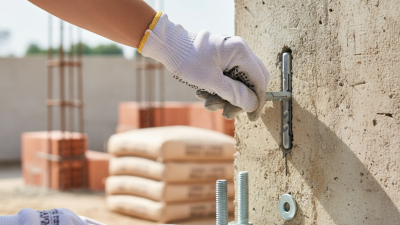
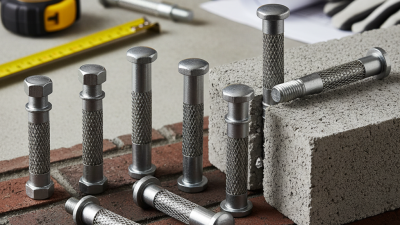
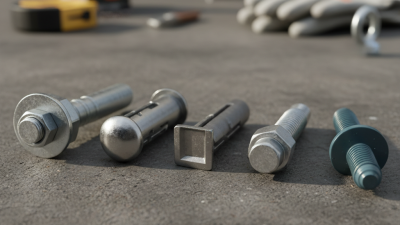
Selecting a sleeve anchor supplier requires more than comparing unit prices. Start by defining the anchor type, base material, and installation environment. Common options include hex-head, stud-head, and countersunk sleeve anchors. Galvanized steel suits many indoor applications, while stainless steel is safer in damp or corrosive areas.

The choice is not always obvious.

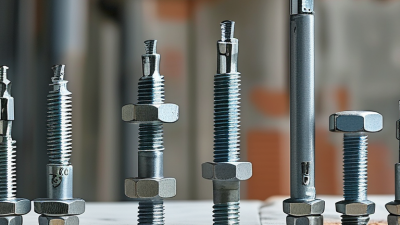
For M6–M16 sizes, check diameter, effective embedment, fixture thickness, and required hole depth. A practical M8 anchor may suit light equipment, while M12 or M16 versions can support heavier fixtures. However, diameter alone does not determine capacity. Concrete strength, cracked or uncracked conditions, edge distance, spacing, and installation torque also matter. I always inspect a sample installation because a clean drawing can hide poor expansion.

Design loads should follow EN 1992-4 principles, covering tension, shear, combined actions, and failure modes. Ask suppliers for tested characteristic resistance values, partial safety factors, recommended embedment, and validated installation instructions. Their technical data should identify the concrete class and testing conditions. A supplier with traceable batches and inspection records is more reliable than one offering only attractive figures. Do not copy a catalog load directly into a project calculation. Site tolerances, drilling dust, and damaged concrete can reduce performance. A neat spreadsheet is not enough. Rechecking assumptions remains necessary.
Check ISO 9001, CE/ETA, and Full Heat-Treatment Traceability Records

When choosing China’s top sleeve anchor suppliers, certification should be checked beyond a logo on a website. Ask for the current ISO 9001 certificate and verify its certificate number, issuing body, factory address, and approved scope. ISO 9001 shows a controlled quality system, but it does not automatically prove anchor strength or installation performance. Check the details.

For construction projects, request CE documentation and the applicable ETA, when relevant to the anchor’s intended use. Compare the product name, size range, load category, and manufacturer information across every document. A mismatch may indicate outdated paperwork or a different production site. Contact the certification body directly when possible. Do not rely only on scanned files.

Full heat-treatment traceability deserves equal attention. Each batch should connect to a furnace number, treatment date, temperature curve, holding time, operator record, and material certificate. Hardness and mechanical test results should match the same batch code printed on production and packing records. Calibration records for thermocouples and testing equipment add useful evidence. Keep records linked.

In supplier audits, buyers sometimes focus on polished certificates and overlook production records. That is an understandable mistake. A certificate can look convincing while traceability remains incomplete. Request sample records, not selected summaries. Review how rejected batches are isolated and corrected. The best supplier is not merely well documented; its records should remain clear when checked line by line.

Compare Carbon-Steel Grades, Zinc Coating, and ASTM B117 Test Hours

When choosing China’s top sleeve anchor suppliers, compare steel grade and coating data together. A strong anchor needs both load capacity and corrosion resistance. Common carbon-steel options include grades 4.8, 5.8, and 8.8. However, these designations should not be accepted without mill certificates and batch traceability. Q235 and Q355 may appear in local documentation, but they are not automatic equivalents to international fastener grades.

Coating thickness deserves close attention. ASTM F1941 and ISO 4042 provide recognized methods for measuring electroplated zinc coatings. Many practical specifications request approximately 5–15 micrometres, depending on the environment and product class. Ask suppliers for coating-thickness records, not only photographs. Small visual defects can hide poor coverage inside the expansion sleeve. That shortcut is tempting, but weak.

ASTM B117 uses a 5% sodium-chloride solution at about 35°C. It creates a controlled salt-fog environment, useful for comparing production batches. Yet ASTM B117 does not convert test hours into guaranteed outdoor service years. AMPP technical guidance also warns against treating salt-spray duration as a complete field-performance prediction. A supplier claiming 1,000 hours should state the test method, red-rust criterion, sample preparation, and laboratory accreditation. Test hours mislead. In my experience, the best purchasing decision combines verified steel chemistry, measured zinc thickness, independent B117 reports, and realistic exposure conditions. Even then, the comparison remains imperfect.

How to Choose China Top Sleeve Anchor Suppliers?

Compare carbon-steel grades, zinc coating thickness, and ASTM B117 salt-spray qualification targets.

Carbon-steel reference Minimum yield strength Typical selection focus
ASTM A36 250 MPa General structural applications
ASTM F1554 Grade 36 248 MPa Anchor rods and concrete anchoring
ASTM F1554 Grade 55 380 MPa Higher-strength anchoring requirements

ASTM B633 service conditions commonly specify zinc coating thicknesses of approximately 5, 8, 12, and 25 μm for SC1 through SC4. The ASTM B117 values shown are practical qualification targets for supplier comparison, not universal pass/fail requirements; actual corrosion performance also depends on surface preparation, chromate or sealer treatment, anchor geometry, and installation conditions.

Audit Capacity Using Monthly Output, QC AQL, and Batch Inspection Data

How to Choose China Top Sleeve Anchors Suppliers?

A reliable supplier should prove capacity with records, not confident claims. Ask for the last six months of monthly output. Compare planned volume with actual shipped quantities. Look for stable production, not one unusually large month. A factory producing 800,000 anchors monthly may still struggle during peak orders. Check machine counts, shift patterns, raw material storage, and packing space during an onsite audit. Empty floors can be informative.

Quality evidence requires more than a certificate. Request QC AQL standards for dimensions, thread condition, expansion performance, and surface finish. Review sampling levels, acceptance numbers, and rejected quantities. For sleeve anchors, inspectors should measure diameter, length, nut fit, and sleeve movement. Ask for photographs of gauges and test fixtures. Small details matter. However, AQL results alone do not guarantee every piece is perfect. Sampling has limits.

Examine batch inspection data from recent shipments. Each report should identify the production date, batch number, material specification, sample size, test results, and inspector. Match these records with packing lists and retained samples. A trustworthy team can explain abnormal results without changing the data. I have found that honest suppliers sometimes show minor failures and corrective actions. That is better than spotless reports with no traceable evidence. Still, audits can miss problems, especially when production changes after approval. Schedule follow-up checks and compare future batches against the original baseline.

Validate Samples with ASTM F606 Tensile and Shear Test Results

How to Choose China Top Sleeve Anchors Suppliers?

A reliable supplier should provide traceable test evidence, not polished certificates alone. Request sample identification, steel grade, diameter, embedment depth, concrete strength, and installation torque. These details make the results repeatable on a real jobsite. ASTM F606/F606M can verify tensile and mechanical properties of threaded fastener components. However, it does not replace assembly testing for a complete sleeve anchor.

Ask for tensile and shear results from the same production batch. The report should show individual readings, average strength, minimum strength, failure mode, and test machine calibration. Look for concrete breakout, bolt fracture, sleeve pullout, or edge failure. ASTM E488/E488M provides a more direct framework for testing anchors in concrete. ACI 355.2 and ICC-ES AC106 also offer useful reference points for evaluating post-installed mechanical anchors.

Do not accept one impressive number.

Compare embedment depths and concrete classes carefully. A 12 mm anchor tested in high-strength concrete may look excellent, yet perform differently in cracked concrete or near an edge. In my experience, missing raw readings often signal weak quality control, even when the headline load appears strong. That judgment can be imperfect. Suppliers should explain deviations, retest rules, and lot sampling clearly. A trustworthy source welcomes these questions and connects each sample to production records, inspection dates, and installation instructions.